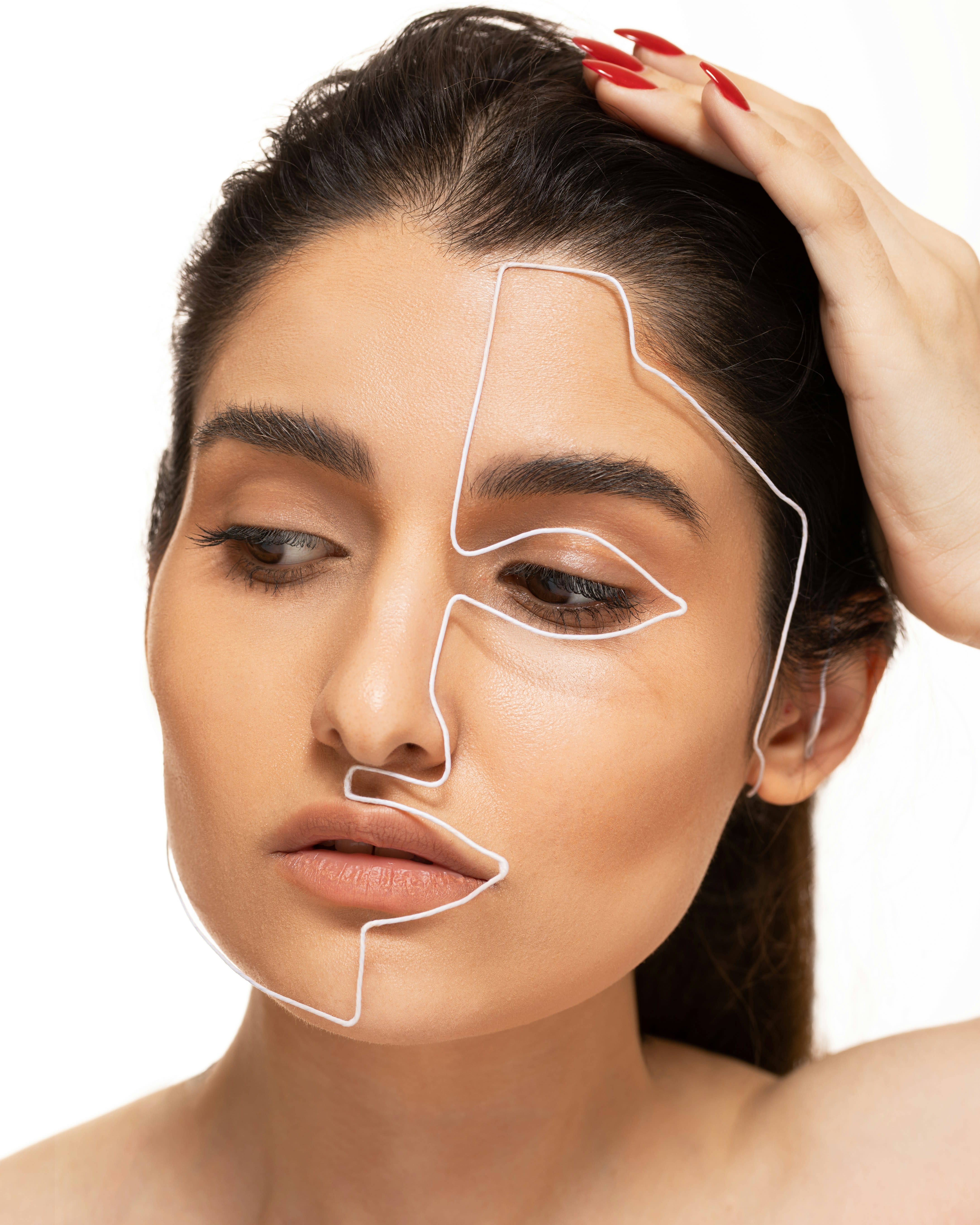
Forehead lines are one of the most common reasons people consider Botox for the first time. The horizontal lines that appear when you raise your eyebrows can make you look tired, surprised, or older than you feel, even when your face is at rest. Botox is one of the most reliable solutions for these lines, but the difference between a natural, refreshed result and an obvious, frozen one comes down almost entirely to how the treatment is approached.
This article explains how Botox works for forehead lines specifically, how many units are typically needed, what realistic results look like, and how to make sure your treatment produces the soft, natural outcome that most patients are actually aiming for.
Why Forehead Lines Develop
The forehead is one of the most expressive areas of the face. Every time you raise your eyebrows, look surprised, or react to something, the frontalis muscle contracts and the skin above folds horizontally. Over years and decades, those folds become etched into the skin, first appearing only when you make the expression and eventually becoming visible even when your face is at rest.
Genetics, sun exposure, skin thickness, and how expressive you are all influence how quickly these lines develop and how deep they become. Botox addresses the underlying muscle activity that creates them, which is why it remains one of the most effective treatments for this specific concern.
How Botox Treats Forehead Lines
Botox temporarily relaxes the frontalis muscle, the broad muscle across your forehead responsible for raising your eyebrows. When this muscle is relaxed appropriately, the skin above stops being creased by repetitive movement. Existing lines soften, and new lines are prevented from deepening.
The key word here is appropriately. The forehead muscle is not meant to be completely paralyzed. Some movement is essential for natural facial expression, and overdosing the forehead is what creates the frozen, expressionless look that gives Botox an undeserved reputation. A skilled injector relaxes the muscle enough to soften lines while preserving natural movement, which is the difference between a refreshed appearance and an obvious one.
How Many Units You Typically Need
Forehead Botox typically requires 10 to 20 units, depending on the size and strength of your frontalis muscle, the depth of your existing lines, and your aesthetic goals. Men generally require more units than women due to greater muscle mass. Patients with strong, expressive foreheads may need more units to achieve meaningful softening, while patients with finer muscles may achieve excellent results with fewer.
Most injectors will recommend a specific unit count based on a thorough assessment of your facial movement during consultation. Underdosing is one of the most common reasons patients feel their Botox did not work or did not last, and it is often the result of a clinic cutting costs on product rather than adjusting to the individual.
According to the American Academy of Dermatology, dosing should always be individualized based on muscle mass, movement patterns, and the patient's aesthetic goals rather than applied as a standard formula.
Why the Glabella Often Needs Treatment Too
The forehead does not exist in isolation. The glabella, the area between your eyebrows where frown lines form, works in coordinated movement with the frontalis muscle above. When the forehead is treated alone without addressing the glabella, the frown muscles can pull the brows downward unopposed, creating a heavy, lowered brow appearance that most patients find unflattering.
Most experienced injectors treat the forehead and glabella together as a single coordinated treatment. A typical upper face protocol might include 10 to 15 units for the forehead and 20 to 25 units for the glabella, with adjustments based on individual anatomy. Discussing this combined approach during consultation is important if your initial inquiry was only about forehead lines.
What Natural Results Actually Look Like
A well-treated forehead should still move. You should still be able to raise your eyebrows expressively, though the movement will be softer and less pronounced than before treatment. The horizontal lines that appeared with that movement should be significantly softened or no longer visible, particularly the dynamic lines that formed only when you made the expression.
Deeper static lines that were already etched into the skin before treatment may soften with consistent Botox use over time but typically do not disappear completely with a single treatment. For very deep, longstanding static lines, a combination approach with skin resurfacing or careful filler may be discussed during consultation. The realistic goal is meaningful softening, not perfect smoothness, and patients who hold that expectation are consistently the most satisfied.
How Long Forehead Botox Lasts
Forehead Botox typically lasts three to four months, in line with the standard Botox duration range. Some patients with smaller muscle groups or lower metabolism enjoy results that extend closer to five months. Others, particularly those with strong, expressive foreheads, may notice movement returning closer to the two-and-a-half-month mark.
Patients who maintain their Botox consistently often find that subsequent treatments require slightly fewer units to achieve the same effect, as the repeatedly relaxed muscle becomes incrementally less dominant. This cumulative effect is one of the most clinically interesting aspects of long-term Botox use.
What Realistic Aftercare Looks Like
Forehead Botox aftercare is the same as standard Botox aftercare. Avoid lying flat for four hours after treatment. Skip vigorous exercise for the rest of the day. Avoid touching, rubbing, or massaging the forehead area for the first 24 hours. Avoid alcohol, saunas, and intense heat exposure for 24 hours.
Your true result will be visible at the two-week mark. Resist the urge to assess your outcome before then, and resist the urge to request touch-ups before the full timeline has played out. Most concerns that arise in the first week resolve on their own as the treatment settles fully.
Common Concerns and Honest Answers
The most common concern is whether forehead Botox will make the face look frozen or expressionless. With proper dosing and placement by an experienced injector, no. A natural-looking forehead Botox preserves movement while softening lines, and most patients report that friends and family notice them looking refreshed rather than treated.
The second most common concern is brow drop or brow heaviness. This is a real risk if the forehead is treated too aggressively without appropriate balance from the glabella, or if injections are placed too low on the forehead near the brow line. An experienced injector knows how to place product to soften lines without creating this complication.
The third concern is whether forehead Botox is appropriate for younger patients without significant existing lines. Preventative Botox in younger patients with strong frontalis activity is a clinically supported approach, using smaller doses to slow the formation of lines before they become etched into the skin.
Choosing the Right Provider
Forehead Botox is one of the most operator-dependent treatments in aesthetic medicine. The difference between a natural, refreshed result and an unflattering one comes down almost entirely to the skill, training, and aesthetic judgment of the injector. Look for board-certified physicians, nurse practitioners, or physician assistants with significant aesthetic experience and a clear philosophy of natural-looking results.
Kami Aesthetics offers Botox treatment with a focus on individualized assessment and natural outcomes. Every appointment includes a thorough evaluation of facial movement, a clear discussion of expected results, and a two-week follow-up to assess the settled outcome.
Botox for forehead lines is one of the most reliably satisfying aesthetic treatments available, when approached with the right provider, the right dosing, and the right expectations. The horizontal lines that have bothered you for years can be softened gently, your expressions can stay your own, and the refreshed result can feel like the version of yourself you remember from a few years earlier. That outcome is genuinely achievable, and the conversation that produces it starts with a thorough consultation.